


Learn how to optimize video, images, and transcripts for AI search. Practical steps, checklists, and examples to improve your multimodal SEO strategy.
Table of Contents
- Introduction to Multimodal SEO
- What is Multimodal SEO?
- Why AI Search Relies on Multiple Modalities
- The New Enviorment of AI Search
- How AI Algorithms Process Content
- The Shift from Keywords to Context and Intent
- Optimizing Video for AI Search
- Key Video Optimization Techniques
- The Role of Transcripts and Captions
- Optimizing Images for AI Search
- Best Practices for Image SEO
- Visual Search and AI Interpretation
- The Power of Transcripts in AI Search
- Beyond Accessibility: SEO Benefits
- Structuring Transcripts for Maximum Impact
- Real-World Impact: Examples and Case Studies
- Case Study: Improving Rankings with Optimized Alt Text and Transcripts
- AI Search Results Comparison: Optimized vs. Non-Optimized
- Your Multimodal SEO Action Plan
- The Essential Checklist for Multimodal Optimization
- Integrating Multimodal SEO into Your Content Strategy
- Conclusion: Embracing the Future of Search
Read also: Why Ranking 1 Isn’t Enough in 2026: Winning Visibility in AI Summarizers
Introduction to Multimodal SEO
In an increasingly complex digital world, search engines are evolving beyond simple keyword matching. The rise of artificial intelligence (AI) has moved in a new era where understanding context, intent, and various forms of media is important.
This shift gives birth to Multimodal SEO, a crucial strategy for anyone looking to maintain visibility and relevance.
What is Multimodal SEO?
Multimodal SEO is the practice of optimizing various content formats. It includes text, video, images, and audio transcripts, to improve their visibility and ranking in search engine results.
It knows that users engage with information in diverse ways and that modern AI-driven search engines can process and understand meaning from these multiple modals simultaneously.
Instead of just focusing on text, multimodal SEO ensures that every piece of your content contributes to a complete ,understandable narrative for both users and algorithms.
Why AI Search Relies on Multiple Modalities
Traditional search largely depended on keywords within text documents. However, AI search engines, powered by advanced Large language models, aim to understand the world more like humans do.
Humans process information through a blend of senses. Seeing, hearing, reading. Similarly, AI models are trained on vast datasets including different media types.
They need to have a holistic understanding of a topic, person, or concept by combining clues from video content, visual cues in images, and the textual context of transcripts and surrounding copy.
Relying on a single modality would provide an incomplete picture, holding back the AI's ability to deliver the most accurate and relevant results to user queries, especially as queries become more conversational and new.
The New Landscape of AI Search
The internet is no longer a collection of static web pages. It's a dynamic, interactive ecosystem where visual and sound based content often provide more information, and in a more engaging manner, than text alone.
AI is at the first of this evolution, basically changing how content is found and ranked.
How AI Algorithms Process Content
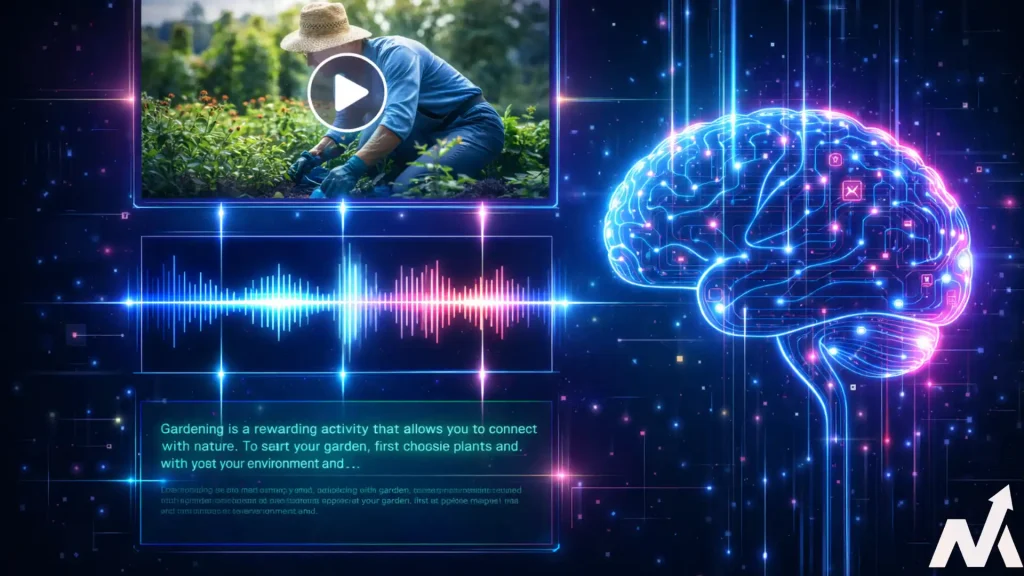
Modern AI algorithms, such as those powering Google's MUM (Multitask Unified Model) and similar advanced systems, move beyond simple keyword matching. These algorithms use deep learning to understand the relevant meaning, sentiment, and context of content across different formats.
For a video, AI doesn't just read the title; it analyzes the visual frames, processes the audio, and reads the supported transcript. For an image, it identifies objects, scenes, and even emotions.
By cross checking these data points, AI can understand complex relationships and connections, enabling it to answer questions that combine information from various sources. This holistic processing allows AI to understand the true intent behind a user's query, even if the keywords used are vague.
The Shift from Keywords to Context and Intent
While keywords remain important, their role has shifted. AI search emphasizes understanding the intent behind a user's query and the broader context of the information. If someone searches for "best way to prune roses," AI doesn't just look for pages with "prune roses."
It seeks out complete content that might include a video demonstrating the technique, images illustrating proper cuts, and a detailed text explanation with FAQs.
The AI needs to understand what is best based on numerous factors, including user engagement signals, expert opinions, and the authority of the source. Multimodal contents are rich in diverse data points. They provide AI with more signals to accurately understand this context and intent, leading to more correct and satisfying search results.
Optimizing Video for AI Search
Video content has brust in popularity, becoming a primary medium for education, entertainment, and product demonstration. For AI search, simply uploading a video isn't enough. Video structuring and strategic optimization is key to ensuring it gets discovered and understood.
Key Video Optimization Techniques
Optimizing your video means making it accessible and understandable not just to human viewers, but also to AI algorithms. This involves different strategies that provide both on-page and technical SEO strategies.
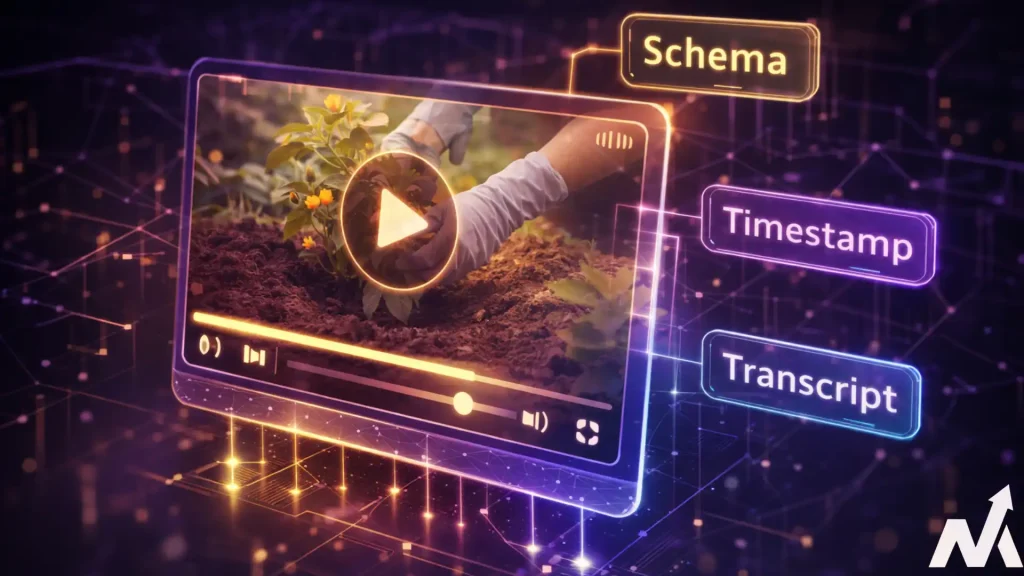
- Transcribe Your Video Content: Upload video files to a tool like Otter.ai or use YouTube's auto captioning. Download the text file and clean it for accuracy. AI models understand context from transcripts, so ensure keywords are naturally placed.
A high-quality transcript provides a complete textual representation of your video, which AI can easily crawl, index, and understand. This forms the basic part of video SEO, allowing AI to identify topics, concepts, and key phrases discussed within the video, much like it would with a traditional blog post. - Implement Video Schema Markup: Schema markup provides structured data directly to search engines, helping them understand your content. For videos, this means specifying details like title, description, thumbnail URL, upload date, duration, and content URL.
This structured data allows AI to quickly understand the core information about your video without having to process the video file itself, thus improving its visibility in rich results. - Optimize Video Titles, Descriptions, and Tags: Just like with blog posts, your video's title, description, and tags are important. Write compelling, keyword-rich titles that accurately reflect the video's content.
Your description should be detailed, summarizing the video's key points and including relevant keywords. Tags help categorize your video and connect it to related searches. These textual elements are primary signals for AI to understand the video's subject matter and relevance to various user queries.
The Role of Transcripts and Captions
Transcripts and captions are no longer just an accessibility feature; they are SEO powerhouses. Transcripts provide a crawlable text version of your video's spoken content, which search engines can easily index.
This allows AI to understand not just the main topic, but every detail discussed, making your video discoverable for highly specific long-tail queries. Captions (SRT files) do the same while enhancing user experience.
By having accurate, keyword rich transcripts, you give AI algorithms all the data they need to thoroughly understand and categorize your video, significantly boosting its chances of ranking for relevant searches.
Optimizing Images for AI Search
Images are important to the web. They provide information quickly. With the rise of visual search and advanced AI image recognition, optimizing your images is more critical than ever. AI can now "see" and "understand" images in advanced ways, making proper optimization a powerful SEO advantage.
Best Practices for Image SEO
Effective image optimization covers more than simple resizing. It involves providing contextual clues that AI can interpret to understand the image's content and relevance.
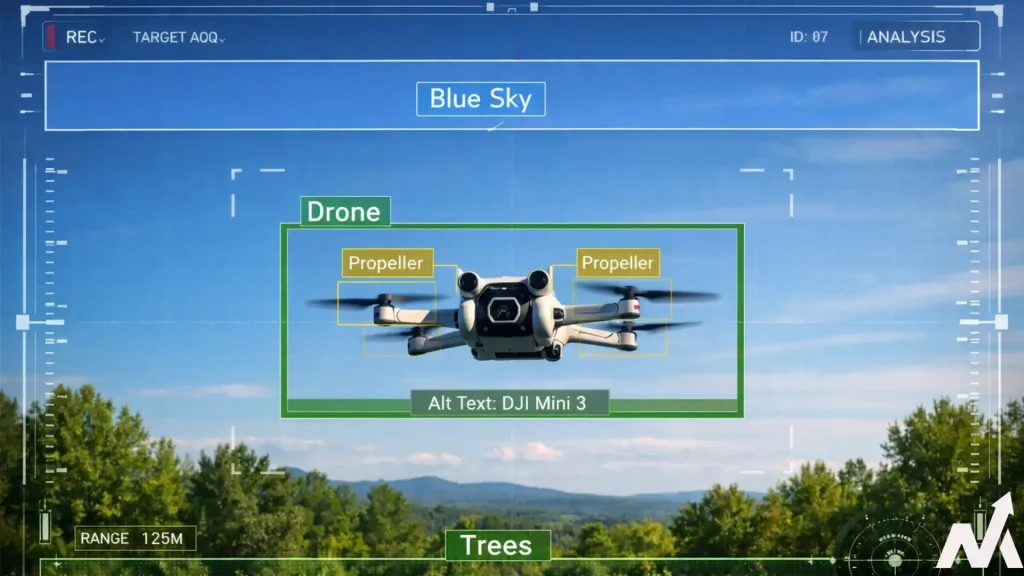
- Craft Descriptive Alt Text: Alt text (alternative text) describes an image for visually impaired users and for search engines when the image can't be displayed. Instead of generic alt text like "image.jpg," provide a short, descriptive phrase that includes relevant keywords.
For example, "A close-up shot of a gardener pruning red roses with sharp shears." This helps AI to accurately understand what the image describes and how it relates to the surrounding content. Poor or missing alt text leaves AI guessing, decreasing your image's search potential. - Leverage Image Filenames and Captions: Your image filenames should be descriptive and keyword rich before uploading (e.g., pruning-red-roses-tutorial.jpg instead of IMG00123.jpg).
Image captions, displayed directly below the image, provide an additional opportunity to describe the image in natural language processing and include keywords. Both filenames and captions provide strong contextual signals that help AI understand the image's subject matter and its relevance to the page's overall topic. - Use Image Schema Markup: Similar to video, image schema markup (e.g., ImageObject or Product schema with image property) can provide details about an image, such as its content location, description, and even copyright information.
This structured data guides AI in understanding complex properties of the image, further enhancing its indexability and potential for rich results in image searches.
Visual Search and AI Interpretation
Visual search, powered by AI, allows users to search using images rather than text. Tools like Google Lens enable users to point their camera at an object and get information about it.
For businesses, this means optimized images can directly lead to conversions. AI's ability to understand details from an image, identifying brands, products, locations, or even specific elements within a scene is constantly improving.
When your images are properly optimized with descriptive alt text, clear filenames, and relevant context, you're essentially speaking the AI's language, making your visual content discoverable in this rapidly growing part of search.

The Power of Transcripts in AI Search
While transcripts are technically text, their unique origin is from spoken word in audio or video. It gives them a special role in multimodal SEO.
They bridge the gap between dynamic media and traditional text based search, providing rich, detailed content for AI to process.
Beyond Accessibility: SEO Benefits of Transcripts
Historically, transcripts were primarily about accessibility, ensuring content was available to the hearing impaired. Today, their SEO value is undeniable. A full, accurate transcript makes your video or audio content fully crawlable and indexable by search engines.
This means every spoken word, every discussed topic, and every mention of a keyword becomes available to AI. AI algorithms can then understand the depth and breadth of your content, identifying specific points of interest that might answer niche queries.
Without a transcript, your video's or podcast's valuable spoken content remains largely invisible to traditional search bots, significantly limiting its discoverability.
Structuring Transcripts for Maximum Impact
Simply dumping a raw text file isn't enough. To maximize SEO impact, transcripts should be structured and refined.
- Clean and Edit: Remove filler words ("um," "uh"), correct grammatical errors, and ensure speaker properties are clear (if applicable). A clean transcript is easier for both humans and AI to read and understand.
- Add Timestamps: Including timestamps allows users (and AI) to jump to specific points in the video or audio. This improves user experience and helps AI understand key moments or topics within the longer content.
- Incorporate Headings and Subheadings: Break down long transcripts into logical sections with descriptive headings. This improves readability and provides strong signals to AI about the content structure and topic hierarchy, much like a well organized blog post.
- Internal Linking: Where appropriate, link relevant keywords or concepts in your transcript to other pages on your website. This builds internal link equity and further helps AI understand the relationships between your content pieces.
By treating transcripts as valuable textual content, you empower AI to fully understand the uniqueness of your multimodal assets, leading to improved rankings for a wider range of queries.
Real-World Impact: Examples and Case Studies
Theory is good, but seeing how multimodal SEO translates into tangible results is even better. These examples illustrate the power of optimizing video, images, and transcripts for AI search.
Case Study: Improving Rankings with Optimized Alt Text and Transcripts
"GreenThumb Gardens," an online plant nursery, struggled to rank for specific plant care tutorials despite having a wealth of video content on YouTube and their blog. Their videos had generic titles, no descriptions, and auto generated, unedited captions. Their blog posts featured beautiful images, but all had alt text like "plant-1.jpg" or were missing entirely.
The Strategy:
1. Video Optimization: GreenThumb Gardens extremely transcribed all their popular tutorial videos, cleaning up the text, adding timestamps, and naturally incorporating relevant long-tail keywords (e.g., "how to propagate succulents from leaves," "identifying spider mites on houseplants"). They then updated video titles, wrote detailed descriptions, and added video schema markup to their blog pages embedding these videos.
2. Image Optimization: For existing and new images on their blog and product pages, they wrote descriptive alt text that not only described the image but also included keywords (e.g., "close-up of healthy Fiddle Leaf Fig leaves," "gardener repotting a struggling orchid"). They also renamed image files descriptively.
The Results:
Within three months, "Green Thumb Gardens" saw a significant improvement in their search visibility. Their tutorial videos began appearing in Google's video carousels and rich snippets for specific "how-to" queries. Images from their blog posts started ranking higher in Google Images, driving new traffic to their site via visual search. Their overall organic traffic increased by 35%, and they specifically noted a 20% increase in traffic to pages featuring optimized images and videos. The AI was now able to find the specific valuable content within their media assets, connecting users directly to the visual and educational solutions they want. .
AI Search Results Comparison: Optimized vs. Non-Optimized
Consider a search query like "best drone for beginner videographers."
Scenario A:
Non-Optimized Content: A hypothetical blog post from "Drone Enthusiast Blog" features a video review of a drone.
Video: Title "Drone Review," description "Check out this drone." No transcript provided.
Image: A photo of the drone with alt text "drone.jpg."
Text: Mentions "beginner drone" a few times.
AI Search Result for "best drone for beginner videographers": The Drone Enthusiast Blog post might appear on page 3 or 4, if at all. The AI struggles to understand the specific focus on "beginner videographers" from the limited data provided. It sees "drone" and "review" but lacks the detailed signals to connect it strongly to the user's unique intent. No video rich snippet appears because the video lacks structured data or a complete transcript. The image is unlikely to rank for visual queries related to "beginner drone camera."
Scenario B:
Optimized Content A hypothetical blog post from "Gear Up Reviews" features a video review of a drone.
Video: Title "Top 5 Drones for Beginner Videographers | In-Depth Review," detailed description summarizing key features for beginners, includes video schema markup, and a full, timestamped transcript clearly discussing beginner-friendly controls, camera quality, and price points.
Image: Multiple images of the drone in action, with alt text like "DJI Mini 3 Pro drone flying over a scenic lake, ideal for beginner videographers" and descriptive filenames.
Text: Comprehensive review tailored to beginners, incorporating keywords naturally.
AI Search Result for "best drone for beginner videographers":
Gear Up Reviews' post likely ranks on page 1, potentially with a prominent video rich snippet directly in the search results. The AI easily understands the exact match for "best drone for beginner videographers" due to the combined signals from the video title, description, schema, detailed transcript, and rich alt text.
It can even show specific segments of the video that discuss "beginner videographer" features. The optimized images appear prominently in visual search results, driving additional traffic. This demonstrates how multimodal optimization provides AI with undeniable signals to confidently match content with user intent.

Your Multimodal SEO Action Plan
Implementing a multimodal SEO strategy requires a systematic approach. This section provides a practical checklist and guidance on integrating these practices into your broader content strategy.
The Essential Checklist for Multimodal Optimization
Use this checklist to ensure your content is fully optimized for AI-driven search:
- Optimize image alt text with descriptive keywords
- Generate and filter video transcripts
- Structure data with schema markup for videos and images
- Test content visibility in AI search tools
- Rename image files names with details before uploading
- Add compelling captions to images
- Optimize video titles, descriptions, and tags for keywords and user intent
- Add timestamps and headings to video transcripts for better readability and AI understanding
- Ensure all media files are properly compressed for fast loading times
- Integrate relevant internal links within transcripts and image descriptions
- Monitor performance using analytics tools to identify optimization opportunities
Integrating Multimodal SEO into Your Content Strategy
Multimodal SEO shouldn't be an afterthought; it needs to be an integral part of your content creation workflow.
- Plan for Modalities from the Start: When brainstorming content ideas, consider which modalities (video, images, text) will best give the information. Plan for transcripts, alt text, and schema markup as part of the initial content brief, not just as a final step.
- Educate Your Team: Ensure content creators, videographers, photographers, and writers understand the importance of multimodal optimization. Provide clear guidelines and examples for each asset type.
- Use Tools and Automation: Use transcription services, image optimization plugins, and schema markup generators to streamline the process. While some manual review is always necessary, tools can significantly reduce the workload.
- Audit Existing Content: Don't just focus on new content. Go back and audit your existing video, image, and text assets. Prioritize optimizing your most valuable or highest traffic content first.
- Monitor and Adapt: Search algorithms are constantly evolving. Regularly monitor your search performance for multimodal content, analyze what's working (and what isn't), and adapt your strategy accordingly. The ability of AI to understand meaning will only get more sophisticated, so your optimization efforts must keep pace.
Conclusion: Embracing the Future of Search
The shift towards AI-powered search represents a fundamental change in how information is discovered and consumed online. Multimodal SEO is no longer an optional extra but a critical necessity for any content creator, marketer, or business aiming to stay competitive.
By proactively optimizing your videos, images, and transcripts, you provide AI algorithms with the rich, diverse data they need to thoroughly understand your content, understand its relevance to complex user queries, and ultimately deliver it to the right audience.
Embrace this future by implementing a strong multimodal SEO strategy. Start with the practical steps outlined, follow the detailed checklist, and integrate these practices into your content creation workflow.
The digital landscape will continue to evolve, but by focusing on complete, user-friendly, and AI-optimized multimodal content, you position yourself for sustained visibility and success in the era of intelligent search."


0 Comments