


Google has fundamentally changed how it understands what people are searching for online. This transformation, powered by advanced language technology called BERT, represents the biggest shift in how Google reads and ranks content since the search engine first launched. For anyone creating content online, whether you're a blogger, business owner, or marketer; understanding this change is crucial to staying visible in search results.
Introduction
Search engines like Google have always been the gateway to the internet. They help people find answers, discover products, and connect with information. Over the years, Google has continuously improved how it interprets what you're looking for when you type in a search query.
The latest evolution in this journey centers around how Google now understands natural human language. The way we actually talk and ask questions, rather than just matching specific words on a page. This shift began gaining momentum in 2019 with the Google's official BERT announcement, a breakthrough technology that laid the foundation for today's AI-powered search. This evolution continues today with LLM optimization becoming essential for modern search visibility.
For content creators, this means the old playbook of simply repeating certain words throughout your articles no longer works. Instead, success now depends on truly understanding what your audience is looking for and providing genuinely helpful information through answers.
In this guide, we'll break down what these changes mean, and show you exactly how to adapt your content strategy so your work continues to reach the people who need it.
Table of Contents
- Understanding Modern Search: How Google Now Reads Your Content
- What This Means for Your Content Strategy
- Writing Headlines That Actually Work
- Creating Content That Connects With Real People
- Staying Updated in a Constantly Changing Landscape
- Conclusion: Moving Forward With Confidence
Understanding Modern Search: How Google Now Reads Your Content
Think about how you ask questions to a friend versus typing keywords into a search box. When talking to a friend, you use complete sentences with all the little connecting words like "to," "from," "for," and "about." These small words actually carry huge meaning.
For most of Google's history, the search engine essentially ignored these nuances. It looked for exact word matches and missed the bigger picture of what you actually meant.
Here's a real-world example that shows the difference:
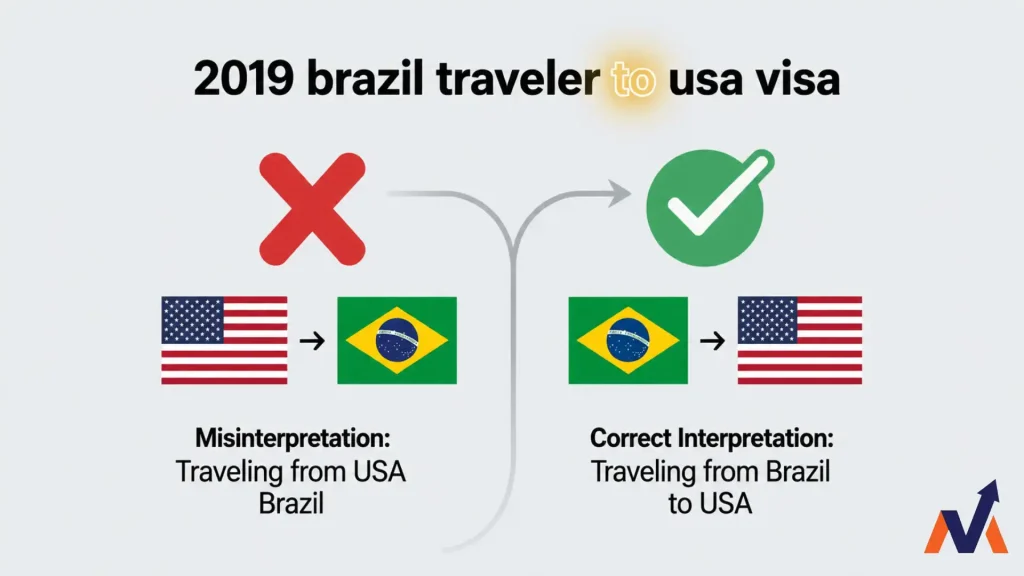
Imagine someone searching for: "2019 brazil traveler to usa visa"
The old way: Google would have ignored the word "to" and shown results about Americans traveling to Brazil, completely backwards from what the person wanted.
The new way: Google now understands that "to" completely changes the meaning. It recognizes the searcher is a Brazilian citizen looking for information about getting a visa to visit the United States.
This ability to understand context, reading words in relation to all the other words around them, is what modern search is all about. Google can now interpret the meaning behind your search, not just match the words you typed.
What This Means for Your Content Strategy
This shift changes everything about how you should approach creating content.
The Old Approach vs. The New Reality
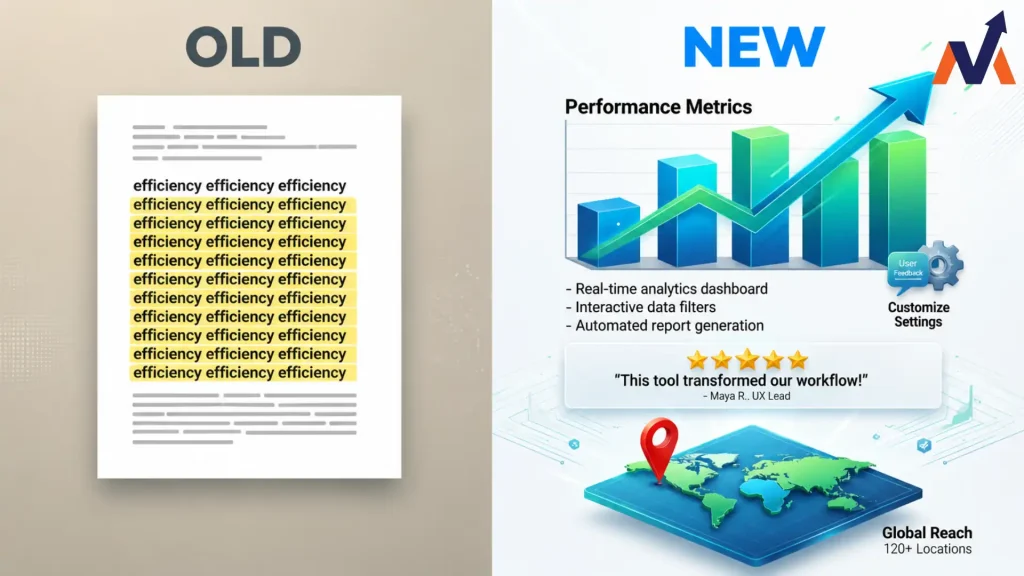
Before: Content creators focused heavily on including specific word combinations throughout their articles. If you wanted to rank for "best restaurants downtown," you'd repeat that exact phrase as many times as possible.
Now: Google cares more about whether your content genuinely answers what someone is looking for. Instead of keyword repetition, focus on comprehensive, helpful information.
Creating Content That Actually Helps People
Example of the shift in action:
Old-style article: A simple list titled "Best Restaurants Downtown" with minimal details; just names and addresses designed to include the keyword phrase multiple times.
Modern approach: A comprehensive guide that not only recommends great restaurants but also includes:
- What makes each place special
- Real reviews and personal experiences
- Practical details like parking information
- Price ranges to help people plan
- What dishes to try
- When to visit for the best experience
- Nearby attractions or events
The second approach naturally covers the topic thoroughly because it's focused on being genuinely useful, not just hitting a word count with repeated phrases.
Understanding What People Really Want
Before you write a single word, ask yourself: "What is this person actually trying to accomplish?"
Someone searching might be looking for:
- A quick answer to a specific question.
- In-depth information to fully understand a topic.
- Comparisons between different options before making a decision.
- Step-by-step guidance to complete a task.
Match your content to what people actually need, not just to specific words you want to rank for.

Writing Headlines That Actually Work
Your headline is often the first, and sometimes only, thing people see in search results. With modern search understanding, the approach to titles has evolved.
What Doesn't Work Anymore
Stuffing your headline with repetitive keywords or awkward phrasing:
❌ "Best Pizza Downtown | Downtown Pizza | Pizza Restaurants Downtown"
What Works Now
Natural, clear headlines that tell people exactly what they'll find:
✅ "Discover the Best Places to Eat Downtown: A Complete Dining Guide"
✅ "Where to Find Great Pizza Downtown on Any Budget"
The key difference: Your headline should sound like something a real person would say, not a robot trying to game the system. Once you have their attention, use micro-hooks to keep readers engaged throughout your content.
Include specific, helpful details:
- Mention locations when relevant (downtown, specific neighborhoods)
- Indicate the type of content (guide, comparison, review)
- Make clear what value the reader will get

Creating Content That Connects With Real People
Modern search rewards content that demonstrates real knowledge and provides genuine value. Here's how to make that happen:
Cover Topics Thoroughly
When you write about something, think about all the related questions someone might have.
Example: If you're writing about downtown dining, naturally connected topics include:
- Different cuisine types available
- Budget considerations (affordable vs. upscale)
- Accessibility (parking, public transportation)
- Best times to visit (avoiding crowds, reservations)
- Special dietary options (vegetarian, gluten-free, etc.)
- The neighborhoods and districts involved
Including these related topics isn't about "optimization". It's about being genuinely helpful and thorough.
Write the Way People Actually Talk
Use natural, conversational language. Instead of robotic keyword phrases, write like you're explaining something to a friend.
Instead of: "Best restaurant downtown eating affordable options"
Try: "Where can you find great food downtown without spending a fortune?"
This natural phrasing works better both for readers and for search engines trying to match your content to how people actually search.
Add Real Expertise and Experience
Modern search increasingly favors content that shows genuine knowledge and real-world experience. Beyond text-based content, modern search also evaluates how you optimize videos, images, and transcripts for AI understanding.
This means:
- Sharing personal insights or firsthand experiences
- Including specific details that only someone with real knowledge would know
- Citing credible sources when referencing facts or data
- Being honest about limitations or drawbacks, not just promoting everything positively
Staying Updated in a Constantly Changing Landscape
Search technology continues to evolve, and multiple systems work together to determine what content appears in results:
Quality Still Matters Enormously
Google has multiple systems designed to identify and reward high-quality content while filtering out low-value material created just to manipulate rankings.
What this means for you:
- Don't create content just to have more pages on your site
- Avoid rehashing what's already been said a hundred times without adding new value
- Focus on depth and usefulness over quantity
Technical Performance Counts
Even the best content won't perform well if your website is slow, confusing to navigate, or difficult to read on mobile devices.
Basic checklist:
- Make sure your site loads quickly
- Track key SEO metrics to measure performance
- Ensure everything works smoothly on phones and tablets
- Keep your layout clean and easy to read
- Avoid annoying pop-ups that block content
Show You Know What You're Talking About
Google looks for signals that content comes from Google's E-E-A-T guidance. You can demonstrate this by:
- Including author credentials when relevant
- Linking to reputable sources for factual claims
- Implementing schema markup to help search engines understand your content structure]
- Updating content regularly to keep it current
- Being transparent about who's behind the content
Before You Hit Publish: A Quick Checklist
Before publishing any new content, run through these questions:
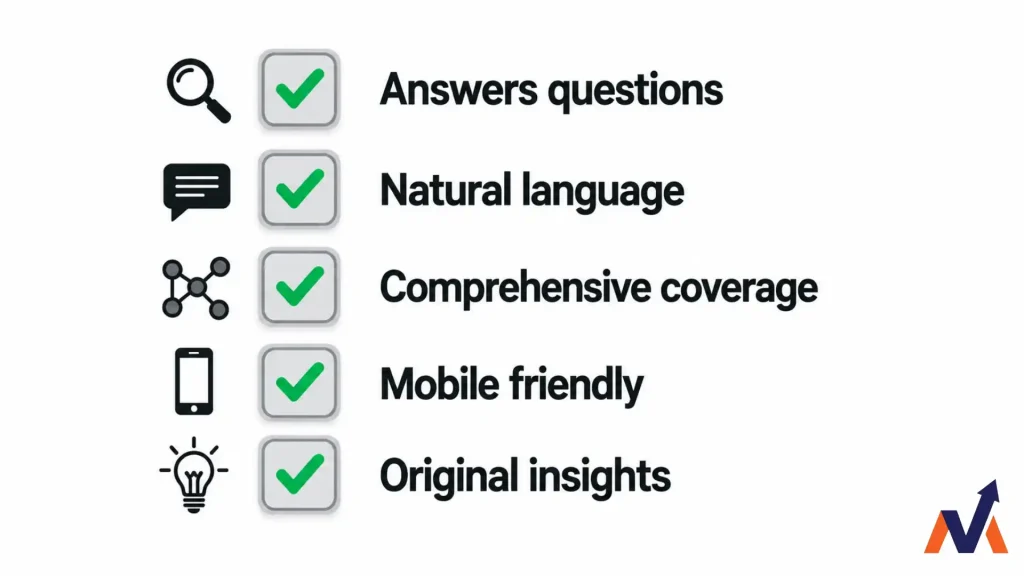
✅ Does your content directly answer the main question someone would have about this topic?
Make sure the most important information appears early, ideally in the first couple of paragraphs.
✅ Are your headlines and subheadings written in natural, conversational language?
They should sound like real questions or statements a person would make.
✅ Have you covered the topic thoroughly, including related subtopics that would naturally interest someone reading about this subject?
Think comprehensively, not just about hitting a word count.
✅ Is your page easy to read and navigate on any device?
Test it yourself on your phone.
✅ Have you included original insights, specific examples, or unique perspectives?
Give people a reason to read your content instead of the dozens of other articles on the same topic.
Conclusion: Moving Forward With Confidence
The evolution of search technology might seem intimidating at first, but it's actually good news for content creators who focus on quality and helpfulness.
The main message is simple: Create content for real people, not for algorithms.
When you focus on genuinely understanding what your audience needs and providing thorough, helpful information in clear language, you naturally align with how modern search works.
The old tactics of keyword stuffing and gaming the system are not just ineffective, they actively work against you now. But if you're committed to creating genuinely valuable content, these changes make it easier for your work to reach the people who need it most.
Stay curious, keep learning about changes as they happen, and always put your audience first. That's the strategy that will serve you well no matter how search technology continues to evolve.



0 Comments