
Introduction: The New Frontier of AI Visibility
The digital landscape is undergoing a huge shift, one that redefines how brands connect with their audience. For decades, Search Engine Optimization (SEO) was the main source of online visibility, especially crafted to make algorithmic crawlers and ranking factors.
However, as we accelerate into 2026, the dominance of Large Language Models (LLMs) has grown so the LLM Optimization Analysis. This isn’t just an evolution; it’s a strong shift. Consumers are increasingly turning to AI assistants, intelligent search interfaces, and generative applications to understand information, summarize content, and make decisions.
In this new era, AI Visibility becomes the critical metric for brand success. It includes the extent to which your brand, products, services, and expertise are accurately and strongly presented within LLM responses.
No longer is it enough to rank on a search results page; your brand must be a foundational part of the knowledge base from which LLMs understand their answers.
Ignoring this shift is similar to ignoring the internet in the 90s. Brands that proactively measure and improve their AI visibility will gain an unparalleled competitive advantage, ensuring they remain relevant, authoritative, and discoverable in an AI-first world.
Understanding LLM Optimization (LLMO) in 2026
LLM Optimization (LLMO) is the strategic process of preparing and presenting your brand’s information in a way that allows large language models to accurately and favourably understand its relevance, authority, and value.
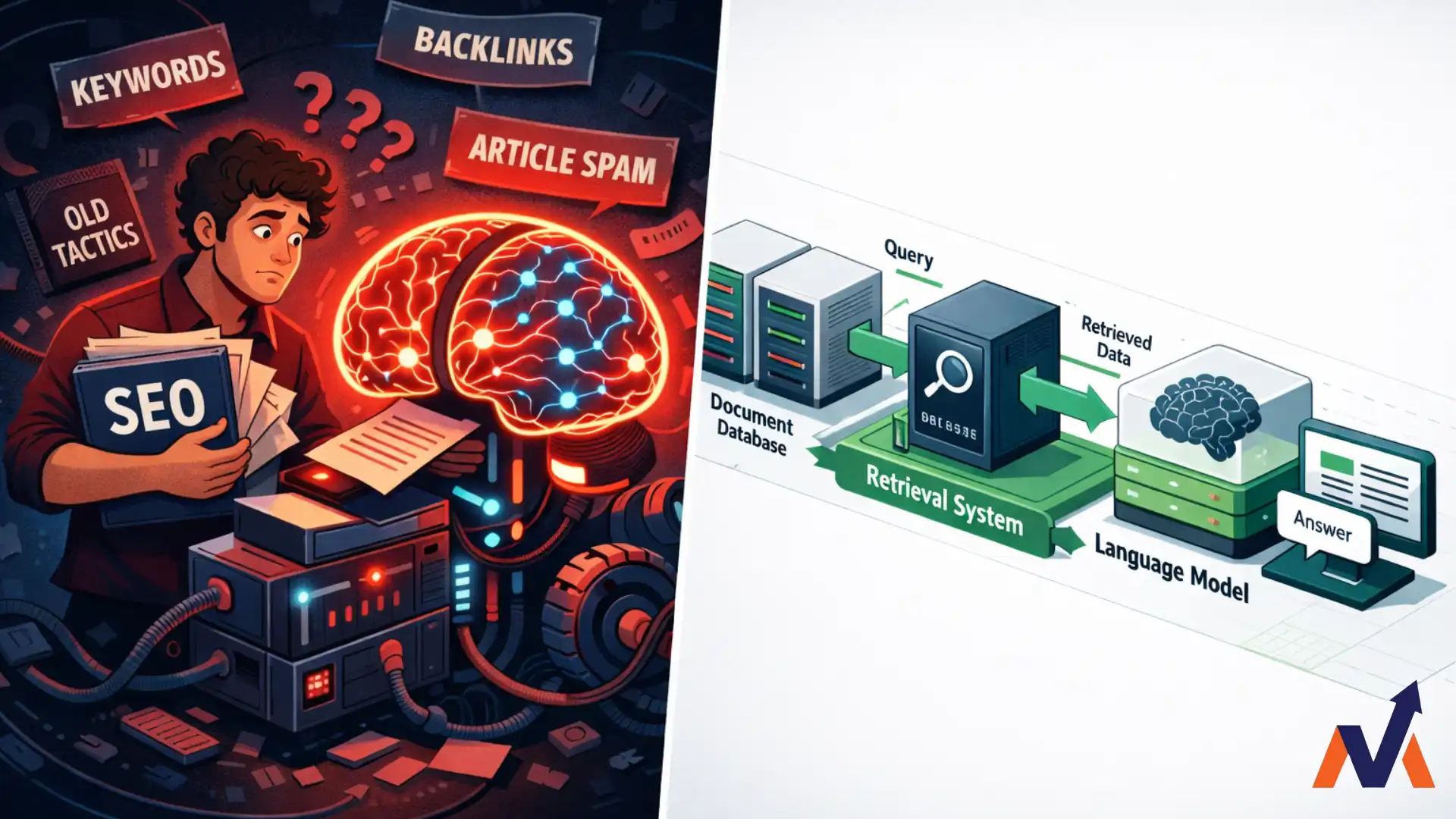
Unlike traditional SEO, which primarily focuses on keywords, backlinks, and technical site health for search engine ranking algorithms, LLMO digs deeper into the relevance, entities, relationships, and context of your content.
Traditional SEO aims for top organic search results; LLMO aims for your brand to be the source of truth or a primary reference point when an LLM filters an answer. LLMs understand knowledge from vast, diverse datasets, often comprising billions of web pages, books, articles, and structured data sources.
They don’t simply present a list of links; they process information, understand intent, and generate smooth, human-like responses. The challenge, and opportunity, for brands lies in influencing this understanding process.
If an LLM cannot access, understand, and validate information about your brand, it will simply take from other, potentially less accurate or less favourable sources.
Consider the difference:
A user might search best coffee makers for pour-over. SEO would help your e-commerce site rank for that keyword.
In an LLM-powered world, a user might ask an AI assistant, What are the characteristics of a good pour-over coffee maker, and which brands are highly rated?
The LLM would then understand from its knowledge base to describe ideal features and recommend brands, citing their strengths. Your brand’s goal is to ensure it is among those recommended, with accurate, positive features cited.
To illustrate how an LLM might process and structure information internally, consider this simplified representation of a brand entity:
{
entity_type: Brand,
name: EcoBrew Coffee,
established_year: 2018,
headquarters: Portland, OR,
products_services: [
{name: Pour-Over Coffee Maker X1, attributes: [sustainable materials, temperature control, barista-grade]},
{name: Artisan Coffee Beans (Ethiopian Yirgacheffe), attributes: [fair trade, organic, medium roast]},
{name: Subscription Service, attributes: [monthly delivery, customizable blends]}
],
mission_statement_keywords: [sustainability, quality, ethical sourcing],
customer_sentiment_score: 0.85,
competitors: [AeroPress, Chemex],
awards: [Sustainable Brand of the Year 2023],
key_differentiators: [closed-loop production, community initiatives]
}
LLMs process such structured and unstructured data to understand relationships, features, and emotions. For your brand to appear prominently and accurately, its digital footprint must provide LLMs with this kind of rich, verifiable, and consistent information.
How to Measure Your Brand’s AI Visibility
Measuring your brand’s AI visibility in 2026 requires a departure from traditional analytics. It’s about understanding how LLMs perceive and present your brand. Here are actionable methods:
Method 1: Prompt Testing
Directly asking LLMs is the most immediate way to see their understanding of your brand. This manual process involves interacting with leading models (e.g., GPT-5, Claude 4, Gemini Ultra) using a diverse set of prompts.
The goal is to see what they understand about your brand’s existence, features, and competitive standing.
Checklist of Key Prompts to Ask:
1.What is [Your Brand Name]?
Tell me about the products/services offered by [Your Brand Name].
- How does [Your Brand Name] compare to [Competitor Brand]?
- What are the reviews or public sentiment around [Your Brand Name]?
- Who is the founder/CEO of [Your Brand Name]?
- What problem does [Your Brand Name] solve?
- What are the sustainability practices of [Your Brand Name]?
- Summarize the key features of [Your Product/Service X]
- Provide a brief history of [Your Brand Name].
- What makes [Your Brand Name] unique?
Document the responses, note accuracy, completeness, and emotion. This helps you understand gaps in the LLM’s knowledge base regarding your brand.
Method 2: Share of Voice (SOV) in AI Responses
Share of Voice in the LLM era tracks how often your brand is mentioned, recommended, or referenced by LLMs in comparison to your competitors for relevant queries. This goes beyond simple keyword volume; it measures thematic relevance and authority.
To track this, you’ll need a relevant approach:
- Define Core Queries: Identify 10-20 critical queries users might ask that should ideally surface your brand (e.g., best eco-friendly sneakers, reliable cloud hosting for startups).
- Run Queries on Multiple LLMs: Execute these queries across your chosen set of LLMs.
- Extract Mentions: Manually or with specialized tools, extract every brand mentioned in the LLM’s generated response for each query.
- Categorize: Group mentions by your brand, competitor brands, and generic mentions.
- Calculate SOV: (Your Brand Mentions / Total Relevant Brand Mentions)
While dedicated LLMO analytics tools are growing, for now, a combination of manual tracking and custom scripting can help gather this data. The aim is to understand whether LLMs are giving your brand the visibility it deserves relative to its market position.
Method 3: Accuracy & Sentiment Analysis
This method focuses on the quality of information LLMs understand about your brand. It’s not just about being mentioned but about being mentioned correctly and positively.
Step-by-Step Process:
1. Identify Core Brand Facts: List your brand’s official name, mission, key products, founder, awards, unique selling propositions (USPs), and core values.
2. Prompt LLMs for Facts: Use prompts like, what is the mission of [Your Brand Name]? or list the main products of [Your Brand Name].
3. Cross-Reference: Compare LLM responses against your official facts. Note every steps of inaccuracy, outdated information, or fabrication (hallucination).
4. Analyse Emotion: For general queries about your brand (What do people think of [Your Brand Name]?), evaluate the emotion expressed in the LLM’s summary. Is it predominantly positive, neutral, or negative? Does it provide the correct brand image?
5. Track Differences: Create a log of all inaccurate and negative emotion. This directly informs your LLMO improvement strategy.
Sample Tracking Table for AI Visibility Audit (Markdown):
| Date | LLM Used | Prompt | Response Summary | Accuracy (1-5) | Sentiment | Key Brands | Action Required |
| 2026-03-01 | GPT-5 | What is EcoBrew Coffee? | Sustainable brand from Portland. | 5 | Pos | EcoBrew | N |
| 2026-03-01 | Claude 4 | Compare EcoBrew to Chemex. | Sustainability vs. iconic design. | 4 | Neu | EcoBrew, Chemex | N |
| 2026-03-01 | Gemini U | Best pour-over maker? | Recommends “EcoBrew Pro” (Hallucination). | 2 | Neu | EcoBrew Pro | Y (Update Info) |
| 2026-03-01 | GPT-5 | Ethical sourcing policy? | Vague mention, lacks specifics. | 3 | Neu | EcoBrew | Y (Add Details) |
Step 1: Entity Optimization
LLMs excel at understanding entities like people, organizations, products, concepts and their relationships. For your brand, this means creating a strong, verifiable brand entity graph.
- Define Core Entities: Clearly identify your brand, its key products/services, founders, key personnel, significant locations, mission, and unique selling points.
- Create Structured Profiles: Develop dedicated, concise, and clear web pages or sections for each entity. For example, an About Us page detailing the company, separate product pages, and founder bios.
- Consistent Naming & Description: Use consistent terminology, branding, and descriptions across all your digital assets. This helps LLMs understand clear connections.
- Relevant Interlinking: Internally link related entities on your website (e.g., link from a product page to the founder’s bio if they’re relevant, or to the sustainability initiatives page). This helps LLMs map your brand’s knowledge domain.
The goal is to provide LLMs with a clear strong blueprint of your brand’s identity, allowing them to understand information with high accuracy.
Step 2: Content Clustering
Move beyond individual keyword optimization to establishing topic authority. LLMs prefer comprehensive, expert-level content that covers a subject holistically.
- Pillar Pages & Cluster Content: Create pillar content (comprehensive guides on broad topics relevant to your brand) and then develop cluster content (more specific articles that relate into sub-topics) that link back to the pillar.
- Emotional Relevance: Focus on the emotional relationships between terms and concepts, not just exact keyword matches. Use synonyms, related phrases, and answer common questions around a topic.
- Demonstrate Expertise: Write content that showcases deep industry knowledge, data-backed insights, and unique perspectives. LLMs are designed to understand expertise and authority from the depth and breadth of information.
- Multimodal Content: Integrate images, videos, infographics, and audio. LLMs are increasingly multimodal, meaning they can get information from various media types, enriching their understanding.
You may also like this post; Multimodal SEO; How to Optimize Video, Images, and Transcripts for AI Search
Step 3: Structured Data & Citations
This is one of the most critical components of LLMO. Structured data provides accurate clues to LLMs, promoting clarity.
- Schema.org Markup: Implement Schema.org markup (e.g., Organization, Product, Service, Article, FAQPage, Person) across your entire website. This tells LLMs exactly what each piece of information represents. Ensure this data is accurate and up-to-date.
- Knowledge Graph Integration: Where possible, submit your brand information to established knowledge bases like Google’s Knowledge Graph or Wikipedia (if eligible). These authoritative sources are frequently used by LLMs to understand factual information.
- Authoritative Citations: Actively getting cited by reputable sources within your industry, academic institutions, and trusted news outlets. LLMs understand trustworthiness and authority from the quality and quantity of external citations. The more authoritative sources link to or reference your content, the more likely an LLM is to understand your brand as a credible source of information.
- Fact-Checking Goals: Partner with fact-checking organizations or participate in industry transparency goals. This can add a layer of verifiable authority that LLMs value.
Step 4: Direct LLM Engagement
As LLMs become more advanced, brands will have direct channels to engage with them.
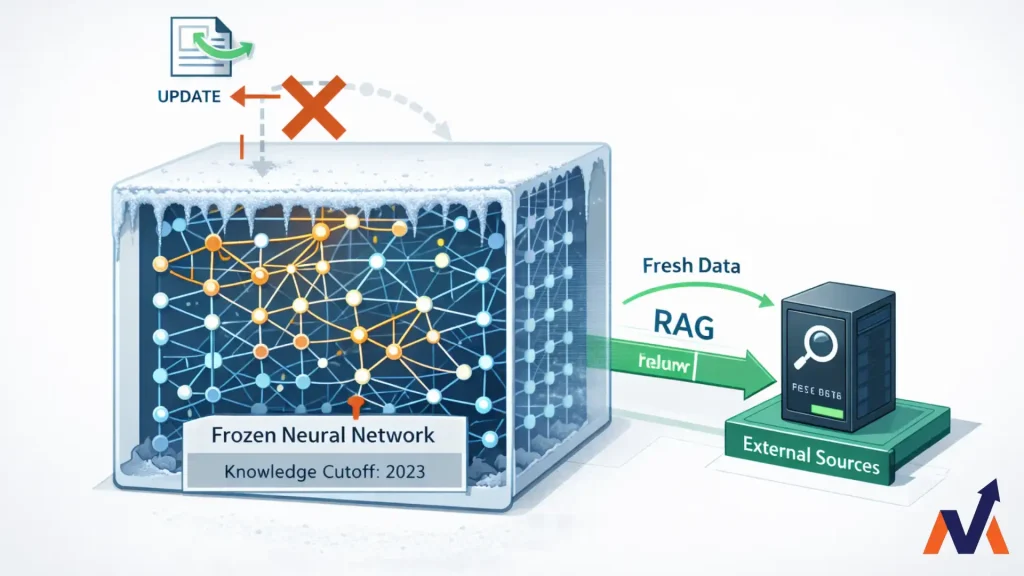
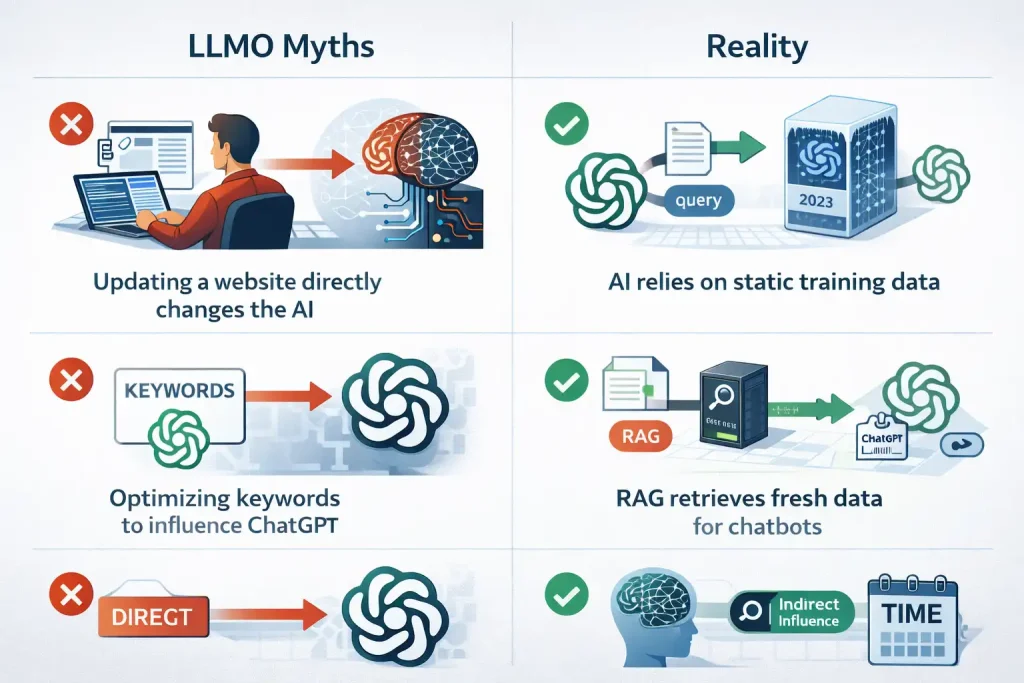
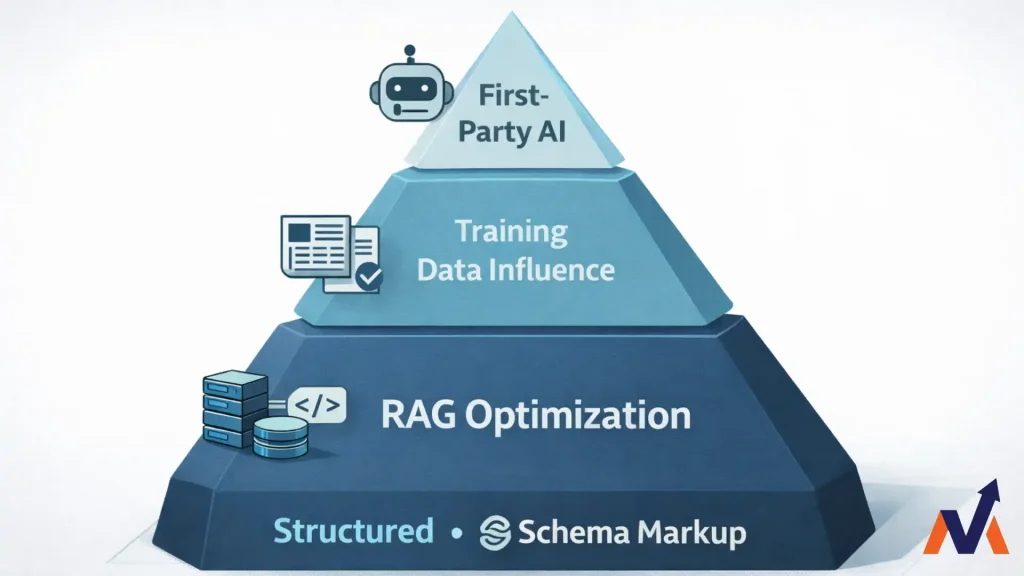
- Proprietary Data Feeds: Explore opportunities to provide your brand’s unique, authoritative data directly to LLM developers, especially for RAG (Retrieval-Augmented Generation) systems. This could be product catalogs, FAQs, pricing information, or customer service knowledge bases. This ensures LLMs understand directly from your source.
- API Integrations: Integrate your brand’s APIs with AI platforms to enable dynamic, real-time data retrieval. For instance, an LLM could access your inventory or customer support knowledge base directly to answer user queries.
- AI Training Data Contribution: Investigate programs where you can contribute high-quality, verified data for LLM training. This is a long-term strategy but ensures your brand is baked into the foundational knowledge of future models.
- Develop Brand-Specific AI Bots: Create your own specialized LLMs or chatbots trained exclusively on your brand’s data. This guarantees accurate, on-brand interactions for specific user journeys.
Step 5: Continuous Monitoring
LLM landscapes evolve rapidly. What works today might be obsolete tomorrow. Continuous monitoring is essential to maintain and improve AI visibility.
- Monthly LLMO Audit: Conduct a monthly audit using the methods outlined in Section 3 (Prompt Testing, SOV, Accuracy & Sentiment).
- Track LLM Updates: Stay informed about updates to major LLM models and their underlying architectures, as these can impact how they understand and present information.
- Competitor Benchmarking: Regularly assess your competitors’ AI visibility. Are they mentioned more? More accurately? This helps you understand successful strategies and identify new threats.
- Understanding Accuracy Check: Specifically track the percentage of times an LLM display correct information about your brand versus incorrect information. Set a target accuracy rate and work to improve it.
- Feedback Loop: Establish a system to identify and address inaccuracies or negative emotions in LLM responses as quickly as possible, by updating your online data and structured markup.
Checklist: Your LLMO Readiness Audit
Use this checklist to assess your brand’s current preparedness for the LLM-driven future.
- Have we defined our brand’s core entities (products, services, mission, key personnel) clearly and consistently?
- Is our website content structured for machine understanding with clear headings, lists, and a logical hierarchy?
- Are we actively implementing Schema.org markup for our key entities and content types?
- Do we have a strategy for acquiring authoritative external citations and backlinks to enhance trust signals for LLMs?
- Are we regularly testing leading LLMs with brand-specific and industry-related queries?
- Do we track our brand’s Share of Voice (SOV) within LLM responses compared to competitors?
- Are we monitoring the accuracy and emotions of information LLMs understand and present about our brand?
- Have we identified any instances of LLM hallucinations or inaccuracies about our brand and developed a plan to correct them?
- Is our content organized into pillar pages and cluster topics to demonstrate comprehensive authority?
- Are we exploring opportunities for direct data integration or contribution to LLM training/RAG systems?
Conclusion: Future-Proofing Your Brand
The shift to an AI-first digital ecosystem is not a future; it’s happening now. LLM Optimization is no longer an optional add-on but a fundamental pillar of digital strategy in 2026. Brands that embrace this new edge will be the ones that will grow, shaping their narratives and ensuring their presence in every AI-powered interaction.
The main component of LLMO revolve around three critical actions: Measure, Optimize, and Understand. You must measure how LLMs currently perceive your brand, optimize your digital footprint to provide clear, structured, and authoritative information, and continuously refine your strategy based on how LLMs understand and present that information.
The ability to adapt, to understand the unique workings of these powerful AI systems, and to proactively engage with them will define brand success. Don’t be left behind in the silent spaces of an AI-powered world. Start your first LLMO audit today and begin future-proofing your brand’s visibility.



0 Comments