

Table of Contents
- What is a Multimodal Content Brief?
- The Benefits of Unified Briefing
- Core Components of a Multimodal Brief
- Step-by-Step Guide to Creating Your Brief
- Optimizing for Different Platforms
- The Multimodal Production Workflow
- Checklist for High-Quality Multimodal Briefs
- Conclusion
What is a Multimodal Content Brief?
Stop wasting time managing separate instructions for videos and blogs. A Multimodal Content Brief is your ‘all-in-one’ roadmap to keep your team aligned and your branding consistent.
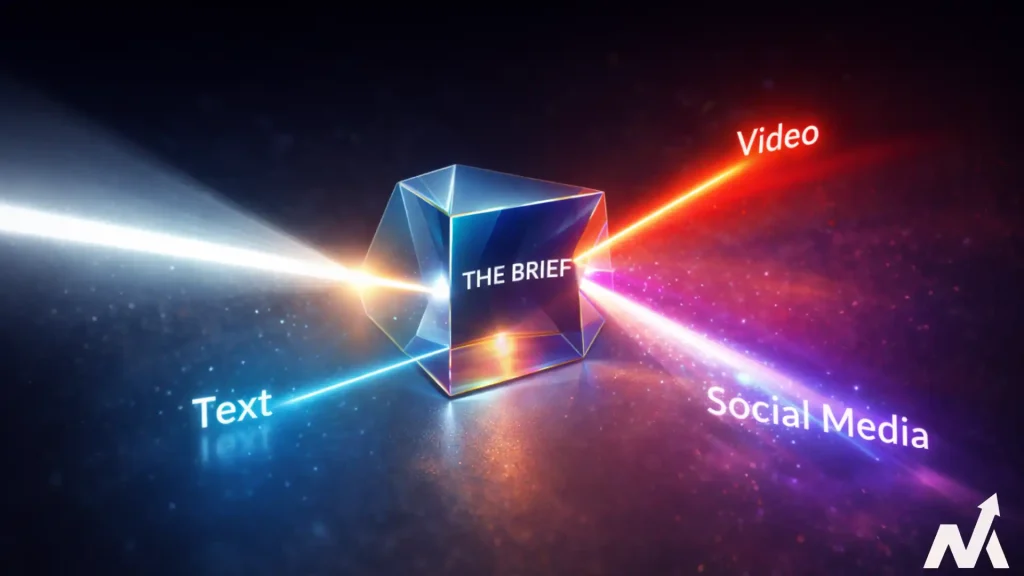
Instead of writing separate instructions for a blog post, a YouTube video, and TikTok shorts, you combine them into one strategic plan. This approach ensures that every piece of media aligns with the same core message and goals.
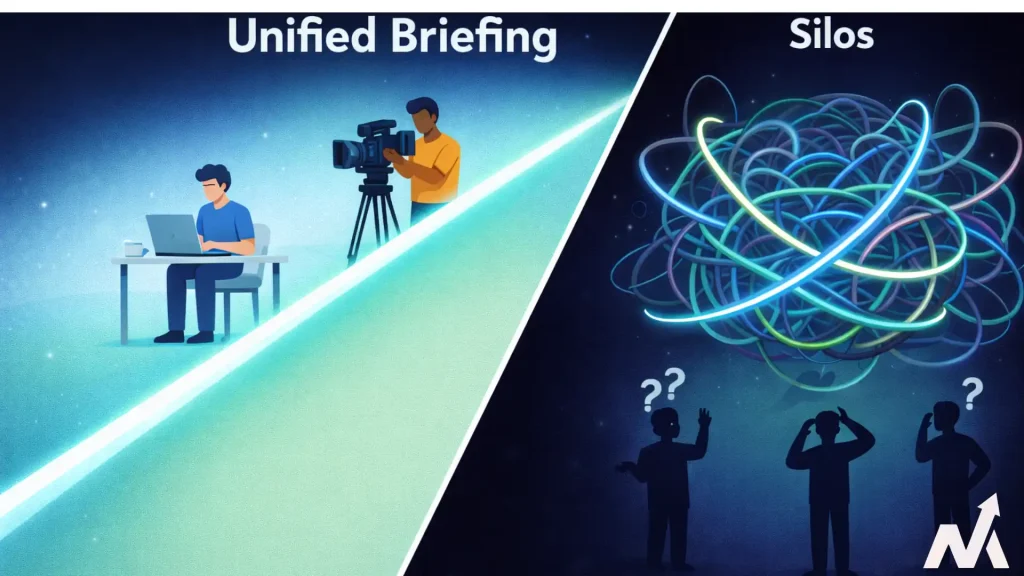
Traditionally, marketing teams worked in silos. The SEO team wrote articles while the social media team filmed videos. This often led to disjointed brand messaging and wasted resources.
A multimodal brief breaks these silos. It treats a topic as a holistic campaign rather than a series of isolated tasks.
By planning for video, text, and short-form clips at the start, you give creators a clear roadmap. They understand how a 2,000-word article connects to a 15-second vertical video. This clarity reduces revisions and speeds up the entire production cycle.
Digitalmarketingnepal Insight: In my experience with SEO automation, I’ve found that planning all content formats during the briefing stage cuts revision rounds by nearly half. One brief means one vision. No confusion.
The Benefits of Unified Briefing
Adopting a unified briefing process gives your team several advantages. Efficiency is the most immediate gain, but the long-term impact on brand authority is equally powerful.
Efficiency and Resource Savings
Creating content from scratch for every platform is expensive. When you brief everything together, you plan your production to capture all necessary assets at once.
Real-life Example: Imagine you run a gardening blog. You want to publish a detailed article on “How to Start a Vegetable Garden.” Without a multimodal brief, your writer drafts the article first. Weeks later, your video team films a separate YouTube tutorial. Then someone scrambles to cut clips for Reels. That is three separate production cycles for one topic.
Now, with a multimodal brief, you plan everything upfront. During the video shoot, the creator films the full YouTube guide AND intentionally records close-up clips of soil preparation and seed planting for vertical shorts. The writer uses the video script’s talking points to structure the article. One shoot. One planning session. Three formats done.
Message Consistency
When different creators work in silos, your message gets lost. A unified brief keeps everyone on the same page.
It defines the tone, key takeaways, and call to action that must remain consistent across all formats. This ensures that a reader of the blog post and a viewer of the short-form video receive the same core information.
Better SEO and Reach
Search engines increasingly favor content that offers various ways to consume information. An article with an embedded video usually performs better than text alone.
By briefing these together, you ensure the video directly supports the text, which keeps users on the page longer. Cross-linking between the article and social shorts boosts your overall digital footprint.
Digitalmarketingnepal Insight: I have seen articles jump from page 3 to page 1 simply by embedding a relevant video that matched the article’s intent. Briefing them together makes this happen naturally.
Core Components of a Multimodal Brief
Every effective brief needs a strong foundation. Without these core elements, the creative team will struggle to understand the “why” behind the content.
Primary Message and Goal
Start with the central theme. What is the one thing you want the audience to remember? Define the primary goal, such as lead generation, brand awareness, or product education. This goal dictates the structure of both the article and the video.
Audience Intent
Identify who this content is for and what they hope to achieve. Someone reading a deep-dive article wants detailed instructions. Someone watching a short wants quick inspiration or a summary. Your brief should acknowledge these different mindsets.
Asset Checklist
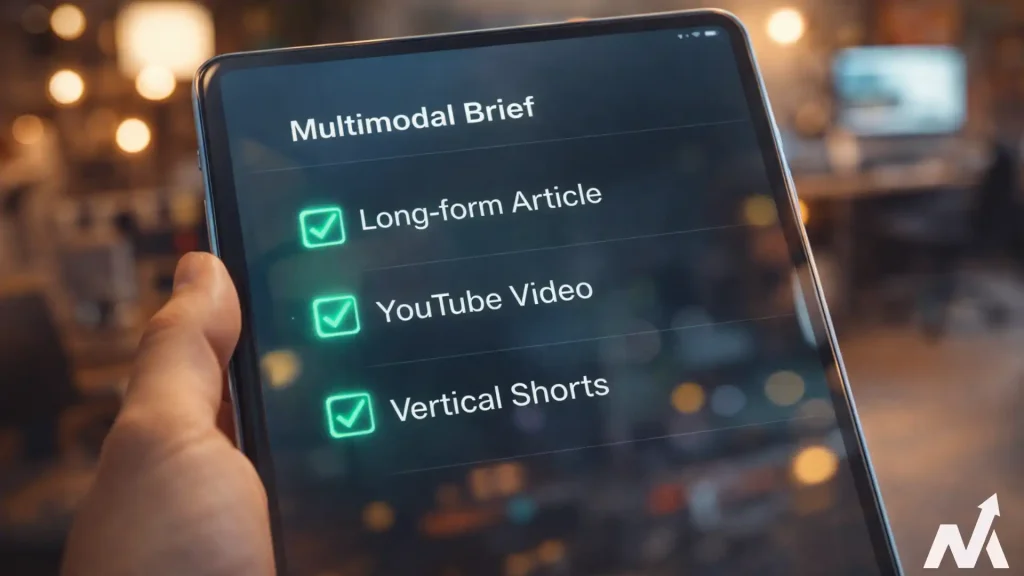
List every deliverable required. This includes:
- One long-form article (target word count, primary keyword).
- One long-form horizontal video (target duration, platform).
- Three to five short-form vertical videos (Instagram Reels or TikTok).
- Supporting graphics or screenshots.
Step-by-Step Guide to Creating Your Brief
Follow these steps to build a comprehensive brief that your team can execute with clarity.
Step 1: Identify the Central Pillar
Choose a topic that has enough depth to support multiple formats. A complex “how-to” guide or a detailed case study works well. Simple news updates might not need a full multimodal approach.
Once the topic is set, perform keyword research to ensure it has search potential across both Google and YouTube.
Step 2: Define Format Variations
Explain how the content should change based on the platform.
- The Article: Focus on technical depth, SEO headers, and internal linking.
- The Long Video: Focus on storytelling, visual demonstrations, and engagement.
- The Shorts: Focus on high-impact hooks and single, digestible tips.
Step 3: Outline the Hook for Each Format
Each format needs a different entry point.
- The article needs a compelling H1 and introduction.
- The long video needs an engaging first 30 seconds.
- The shorts need a visual or verbal hook within the first 3 seconds.
Specify these hooks in the brief. Your creators must know how to capture attention immediately.
Step 4: Map Out Technical Specs
Include the nitty-gritty details to avoid technical errors.
- Aspect ratios: 16:9 for YouTube, 9:16 for TikTok.
- File formats and accessibility requirements like closed captions.
- For articles: include the slug, meta description, and image alt-text requirements.
Optimizing for Different Platforms
Content cannot be a simple “copy and paste” from one channel to another. Each platform has its own culture and technical requirements.
Creating for the Blog
Text remains the best way to rank for complex search queries. Emphasize the need for clear H2 and H3 tags in your brief. Instruct the writer to find places where the video can be embedded to add value. Use bullet points and short paragraphs to make the text scannable.
Creating for YouTube
Long-form video allows for a deeper connection with the audience. The brief should include a basic script outline or a list of talking points. Remind the creator to mention the article as a resource for those who want more detail. This creates a loop between your website and your social channels.
Creating for Shorts and Reels
Short-form video is about speed. The brief should specify that these clips focus on a single “aha!” moment from the larger content piece. Fast cuts, on-screen text, and trending audio help these pieces perform better.
Digital Marketing Nepal’s Insight: In my experience, the best-performing shorts come from moments that were planned during the brief, not discovered randomly in editing. Identify your “aha!” moments early.
The Multimodal Production Workflow
A smooth workflow prevents production delays. Here is the sequence that works best:
- Start with the research phase for the article. This defines the logic of the topic.
- Move to the video script next. Use the article’s headers as a guide for video segments.
- Film the main video. Capture all planned short-form clips during this same session.
- Edit in sequence. The editor cuts the long video while simultaneously identifying the best 15-second segments for shorts.
- Finalize the article. The writer incorporates any interesting quotes or visuals discovered during filming.
This integrated cycle keeps the team aligned and eliminates unnecessary back-and-forth.
Checklist for High-Quality Multimodal Briefs
Before sending your brief to the creative team, run through this checklist:
- Core Objective: Is the main goal clearly stated?
- Keyword Integration: Are primary and secondary keywords listed for SEO?
- Tone of Voice: Is the brand personality defined (e.g., professional, witty, instructional)?
- Hook Variations: Are there specific hooks for the article, long video, and shorts?
- Technical Specs: Are aspect ratios, word counts, and durations specified?
- Visual Assets: Are specific images, b-roll (extra shots), or graphics requested?
- Calls to Action (CTA): Is there a clear next step for the audience on each platform?
- Deadline: Are the milestones for drafts and final versions clear?
Conclusion
Multimodal content briefs are the key to a modern, efficient content strategy. By planning for articles, videos, and shorts in a single document, you eliminate confusion and maximize your creative output.
This method ensures that your brand speaks with one voice across the entire digital landscape.
Ready to scale your content? Download my Multimodal Brief Template below and start creating smarter, not harder.



0 Comments