

Introduction
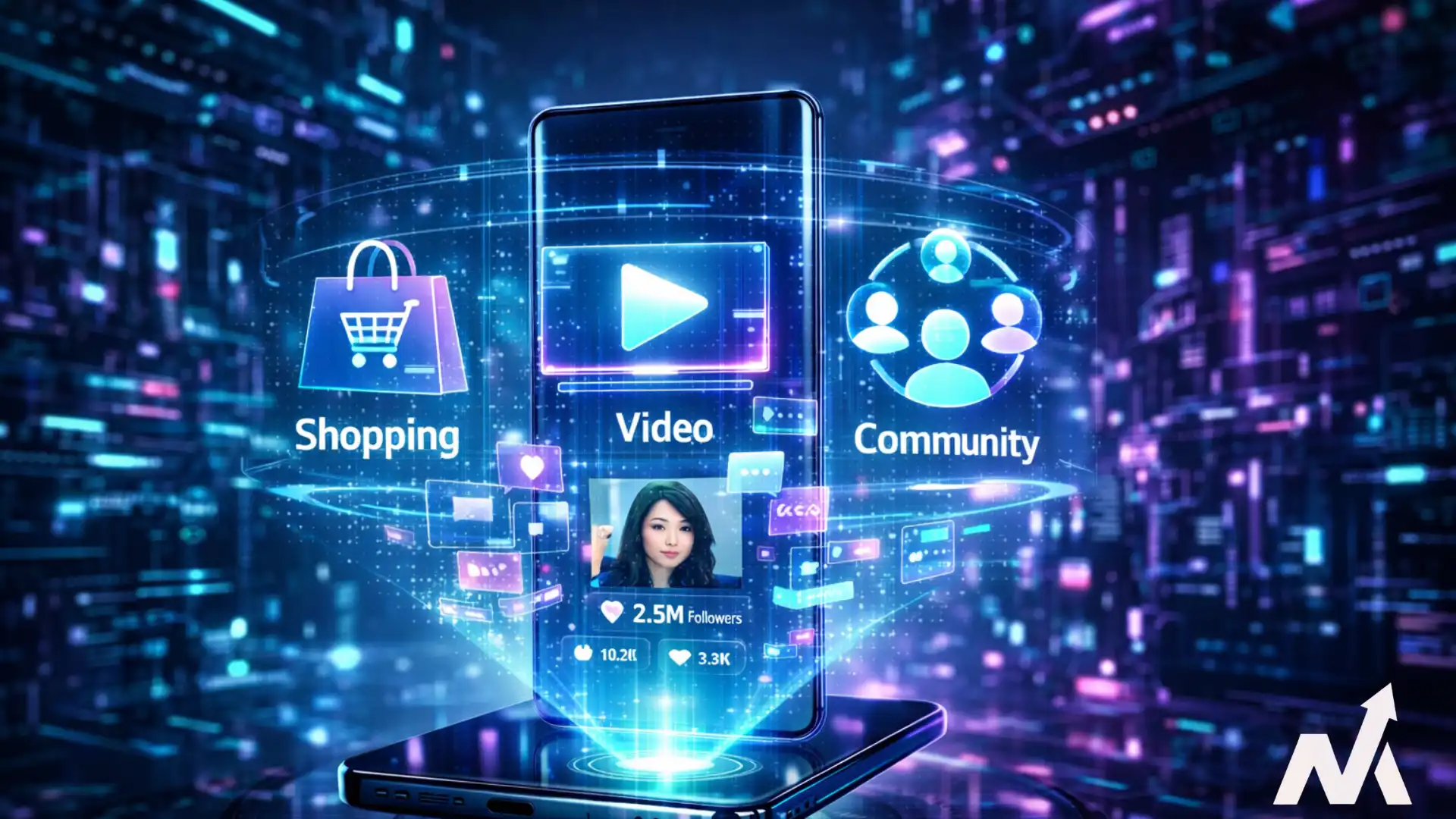
Social media moves faster than almost any other industry. By 2026, the platforms we use today will function as entirely different tools. We are moving away from chronological feeds and simple photo sharing. Instead, the future is built on hyper-personalized algorithms, integrated shopping, and artificial intelligence.
Businesses that rely on 2023 or 2024 strategies will find themselves invisible. To remain relevant, your brand must adapt to how users interact with technology. This guide breaks down the core 2026 social media marketing trends you need to master to stay competitive.
Table of Contents
- The Rise of AI-Personalized Feeds
- Social Media as the Primary Search Engine
- The Transition from Short-Form Video to Immersive AR
- Micro-Communities and the Death of Mass Reach
- Social Commerce and Frictionless Shopping
- Authenticity and the De-Influencing Movement
- 2026 Marketing Strategy Checklist
- Final Thoughts
The Rise of AI-Personalized Feeds
By 2026, algorithms will no longer just suggest content based on what you liked yesterday. They will predict what you want to see based on your current environment, mood, and biometric data. Artificial Intelligence (AI) has moved from a new concept to the backbone of every social platform.
Careful selection of Content Streams
Users now expect content that feels it’s made for them. Generic brand updates no longer reach the feed. AI analyzes a user’s scrolling speed, eye-tracking on mobile devices, and previous engagement to serve content that guarantees retention. For marketers, this means the “spray and pray” method is officially dead.
Practical Steps for AI Content
- Use predictive analytics: Invest in tools that analyze your audience’s peak interest times and preferred topics.
- Focus on retention metrics: Platforms now prioritize how long someone watches a video over how many people clicked it.
- A/B test with AI: Use AI tools to generate 50 variations of a headline to see which one fits with specific sub-sections of your audience.
Social Media as the Primary Search Engine
For younger generations, Google is no longer the first stop for information. In 2026, TikTok, Instagram, and even YouTube Shorts act as primary search engines. People search for “best running shoes” or “how to fix a sink” directly within social apps.
Optimizing for Social SEO
Search engine optimization is no longer just for websites. You must optimize your social media posts to be found by internal platform crawlers. This involves more than just adding a few hashtags.
Checklist for Social SEO
- Keyword-rich captions: Use natural language that reflects common search queries in your captions.
- Alt-text for images: Fill out the alt-text descriptions to help AI identify your visual content.
- Speech to text optimization: Mention your primary keywords out loud in the first three seconds of your videos.
- Location tagging: Local businesses must tag their precise location to appear in geographic searches.
Read also: Multimodal SEO: How to Optimize Video, Images, and Transcripts for AI Search
The Transition from Short-Form Video to Engaging AR
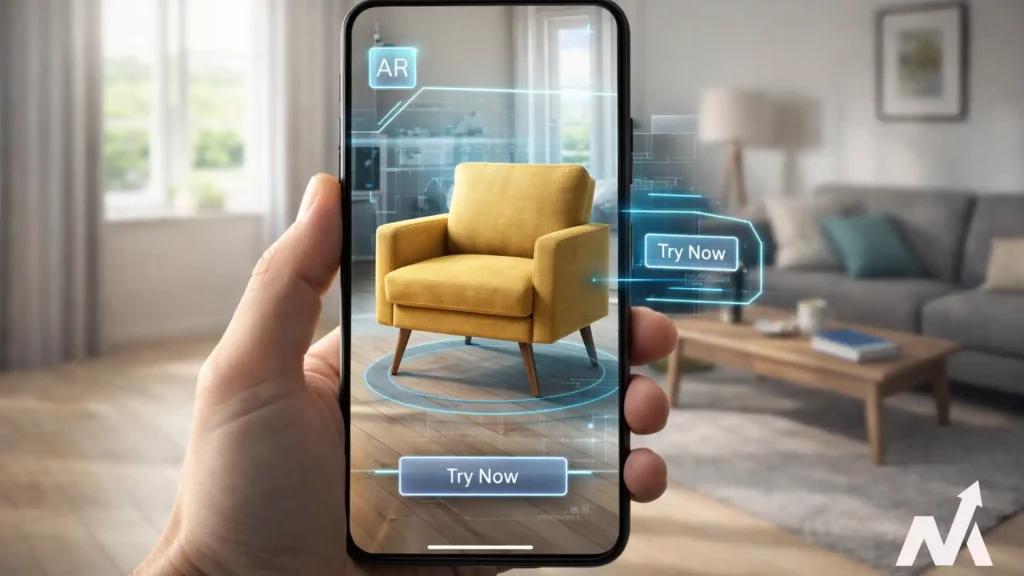
Short form video was the king of 2024, but 2026 introduces a new layer: Augmented Reality (AR). While people still watch videos, they now want to interact with them. AR filters and engaging experiences are standard parts of the social experience.
Interactive Video Content
Static videos are being replaced by “choose your own adventure” style content. Users can tap on products within a video to see how they look in their own room or on their own body all thanks to AI driven video consumption . This level of interaction keeps users on the platform longer and increases brand recall.
Examples of AR in Marketing
- Virtual Try-Ons: Makeup and clothing brands allow users to see products on themselves via a phone camera.
- Interactive Tours: Real estate and travel brands offer 360 degree views directly within a social post.
- Gamified Ads: Brands create mini-games that users play to unlock discount codes.
Micro-Communities and the Death of Mass Reach
The era of trying to appeal to everyone is over. In 2026, the most successful brands are those that foster small, highly engaged communities. Platforms like Discord, Telegram, and specialized Facebook Groups have become the primary hubs for brand loyalty.
Building Private Spaces
Users are tired of the toxicity and noise of open public feeds. They are retreating into private spaces where they can discuss specific interests with like-minded people. Brands that facilitate these spaces gain great trust.
How to Build a Micro-Community
1. Identify a niche: Do not create a “Brand Fan Club.” Create a “Sustainability Enthusiasts Hub” or a “High-Performance Coding Circle.”
2. Offer exclusivity: Give community members first access to sales or new products.
3. Encourage peer-to-peer interaction: The best communities don’t require the brand to speak constantly. They allow users to help each other.

Social Commerce and Frictionless Shopping
Shopping on social media is no longer a multi-step process. In 2026, every post is a point of sale. If a user sees a product in a video, they can buy it with a single tap without ever leaving the app. This is known as frictionless shopping.
The Growth of Live Stream Shopping
Live shopping events have moved from niche experiments to mainstream marketing. Influencers and brand representatives host live shows where they demonstrate products in real time. Viewers can ask questions and purchase items instantly during the broadcast.
Enhancing the Shopping Experience
- One-tap checkout: Ensure your social shop is synced with your inventory management system for seamless transactions.
- AI Shopping Assistants: Use chatbots within your social profile to answer sizing or shipping questions immediately.
- User-Generated Proof: Feature customer reviews and photos directly on the product tag in your social shop.
Authenticity and the De-Influencing Movement
By 2026, consumers have become skeptical of overly polished advertisements. They can spot a script from a mile away. The trend of “de-influencing” where creators tell their followers what not to buy has forced brands to be more honest.
Embracing Vulnerability
Brands that show the “behind the scenes” or admit to mistakes find more success than those that try to appear perfect. Authenticity is the most valuable currency in 2026. This means using real employees in videos instead of hired actors and showing the manufacturing process.
Tips for Authentic Content
- Avoid heavy filters: Use natural lighting and minimal editing.
- Feature real customers: Share unedited testimonials and raw footage of people using your product.
- Be transparent about values: If your brand supports a cause, show the actual work being done rather than just posting a logo.
2026 Marketing Strategy Checklist
Use this checklist to ensure your brand is ready for the upcoming year. If you cannot check off at least five of these items, it is time to plan your strategy.
- Our social posts are optimized with keywords for search functionality.
- We have a dedicated private community (Discord, Group, etc.) for our top customers.
- At least 30% of our video content includes an interactive or AR element.
- We have a fully functional social shop integrated into our main profiles.
- Our content schedule is guided by AI-driven predictive analytics.
- We prioritize raw, unpolished content over high-production commercials.
- We respond to all social media comments and direct messages within 60 minutes using a mix of AI and human support.
Final Thoughts
The 2026 social media marketing trends focus on one thing: the individual. Whether it is through AI-driven feeds, niche communities, or frictionless shopping, the goal is to make the user feel seen and heard. While AI helps us create more content faster, the real challenge for the future is retention.
You must understand the state of attention in 2026 to ensure your content actually stops the user. The brands that win in 2026 will be those that provide utility, entertainment, and a sense of belonging. Start implementing these changes today to ensure you are not left behind in the digital evolution.


0 Comments